Lagoon Triggerfish Humu-Humu
$49.69
The Lagoon Triggerfish Humu-Humu has a terminal mouth that sits directly at the end of its snout. It has heavy teeth and incisors, and most of its food content is algae that is scraped off surfaces. It also feeds on crustaceans such as isopods from the sandy ocean floors. When foraging for food it remains close to its home or forages in shallow reefs away from living coral. This fish is considered a facultative omnivore because while it eats plants and animals it can sustain itself on a diet of either.
Lagoon Triggerfish Humu-Humu
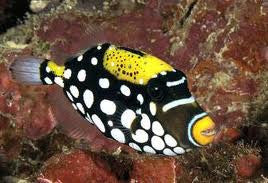
The Lagoon Triggerfish Humu-Humu , also known as the rectangular triggerfish, wedgetail triggerfish[2] or by its Hawaiian name humuhumunukunukuāpuaʻa (pronounced [ˈhumuˈhumuˈnukuˈnukuˈwaːpuˈwɐʔə], meaning ‘triggerfish with a snout like a pig’,[3] also spelled humuhumunukunukuapua’a or just humuhumu for short), is one of several species of triggerfish. It is found in coral reefs in the entirety of the Western Pacific Ocean from North to South and Eastern Central Pacific. It is also found in the Indian Ocean from East to West and the Southeast Atlantic Ocean. It exists in 0 to 50 meters in depth.
It has a small second dorsal spine which is used to lock its main spine into an upright position. When sheltering in a small crevice, this locking helps protect the fish against extraction by a predator.
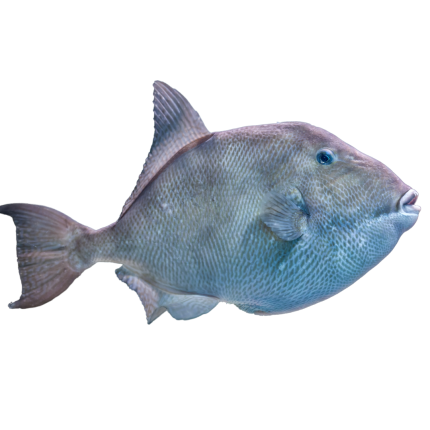
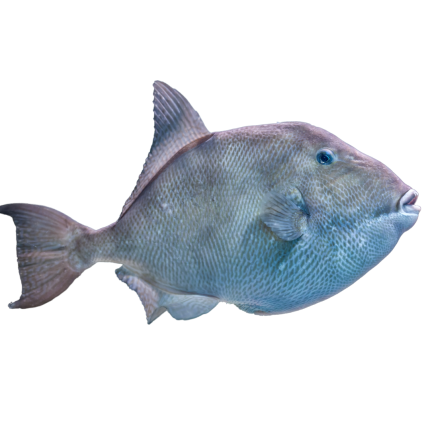
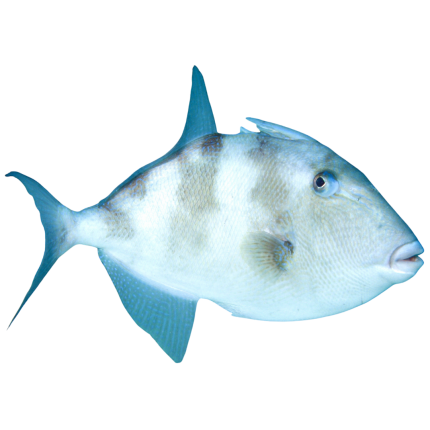
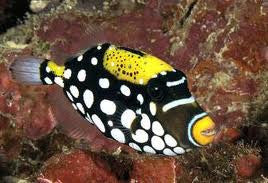
The Lagoon Triggerfish Humu-Humu is characterized by having a noticeably large snout and blue lips that resemble that of a pig’s snout. It has strong teeth and a terminal mouth which help aid in scraping food off surfaces. Along the dorsal side and anterior end of the fish, it has an orange-brown coloration and a white belly. The reef triggerfish has 3 dorsal spines, 22–25 dorsal rays, no anal spines, and 20–22 anal soft rays. The soft dorsal fins, anal fins, and pectoral fins have a pale white coloration to it. The caudal fin has a cloudy murky color.[5]
The Lagoon Triggerfish Humu-Humu is commonly confused with its two closest living relatives the lagoon triggerfish and picasso triggerfish.
The Lagoon Triggerfish Humu-Humu (small) has a terminal mouth that sits directly at the end of its snout. It has heavy teeth and incisors, and most of its food content is algae that is scraped off surfaces. It also feeds on crustaceans such as isopods from the sandy ocean floors. When foraging for food it remains close to its home or forages in shallow reefs away from living coral. This fish is considered a facultative omnivore because while it eats plants and animals it can sustain itself on a diet of either.
The Lagoon Triggerfish Humu-Humu is recorded to make four distinct sounds that have been categorized as grinding, drumming, grunting, and snapping.[7] Attached is a recording of what drumming sounds are[clarification needed].[8][9]
The grinding sounds are heard when eating. This is thought to be a signal used to indicate to other reef triggerfish that the territory is theirs. It is also believed that it is used to advertise their territories to attract females.
Drumming sounds occur by flapping the pelvic fins from the sonic membrane creating a vibration connection to the swim bladder. The swim bladder acts as a chamber to produce low and high-frequency sounds. Drum rates increase when there are predators around which can serve as an antipredation function. These drumming sounds are similar to grunting sounds which both involve the use of the swim bladder. Grunts are identical to that of a pig grunt and are mostly audible and recorded when physically holding the fish.
Snaps occur by the rapid extensions and retraction of the jaw. Audibly there are no real differences between a snap and a grinding sound however they occur at different frequencies and settings. The snaps are most observed during conspecific interactions such as territorial conflict. Although the true meaning of the snaps remains a mystery reef triggerfish show no signs of kin selection.


- Vestibulum penatibus nunc dui adipiscing convallis bulum parturient suspendisse.
- Abitur parturient praesent lectus quam a natoque adipiscing a vestibulum hendre.
- Diam parturient dictumst parturient scelerisque nibh lectus.